
Humanity’s relationship with food has undergone one of the fastest evolutionary changes in human history over the past century. While survival depended for millennia on natural, unprocessed, and seasonal food, the industrial revolution of the 20th century, the development of the chemical industry, and mass marketing reshaped both food composition and human taste perception. Today, both in academic food science and within holistic and alternative health circles, there is ongoing discussion about how ultra-processed food (UPF) alters taste receptor sensitivity, creates neurochemical addiction, and hinders the transition toward nutrient-dense, so-called “pure cellular food.”
The comprehensive overview below combines data from modern neurobiology, food science, and health economics with the perspectives of holistic and nature-based health philosophies.
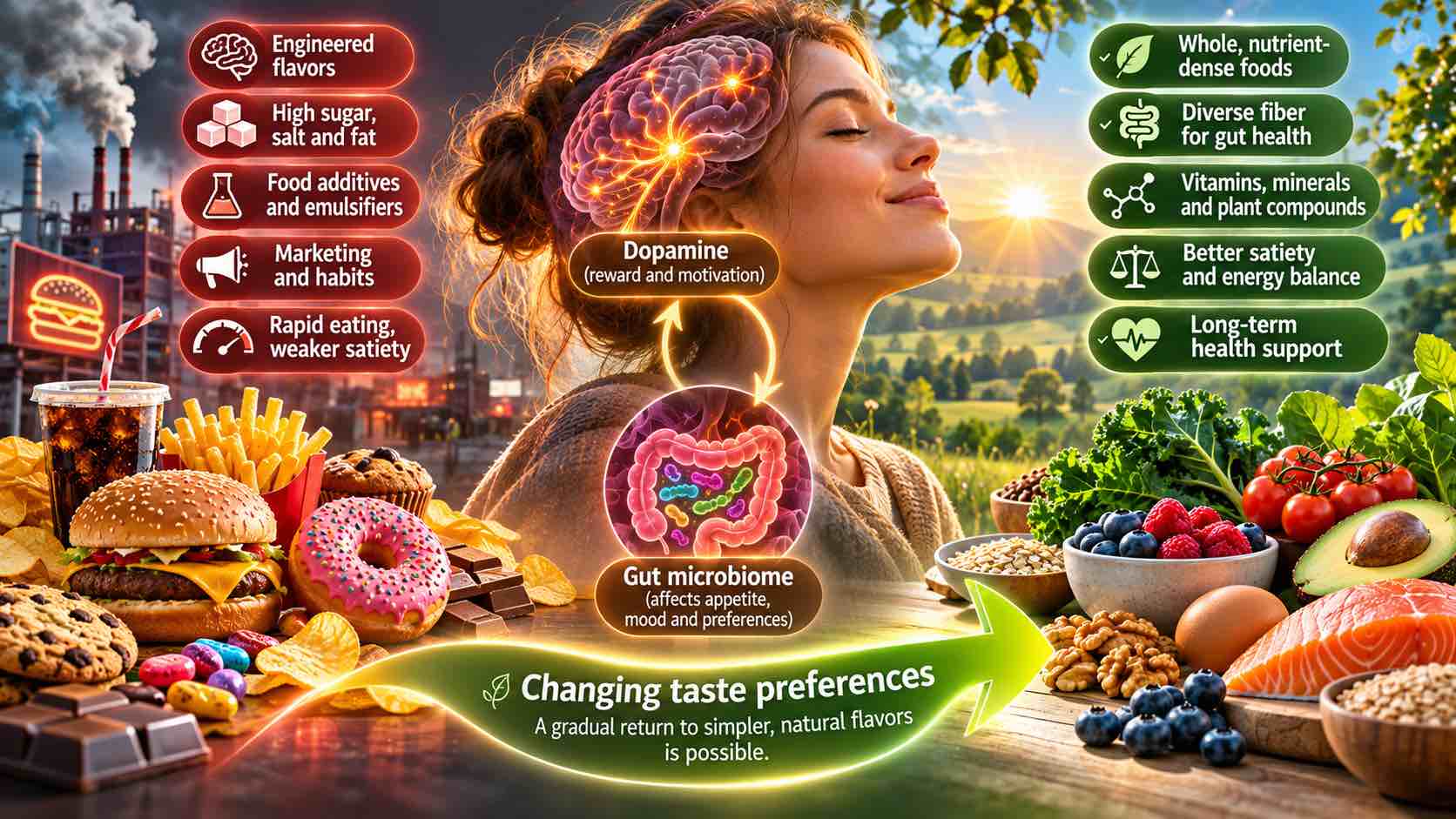
1. The Development of the Food Industry over the Past 100 Years: Taste Technology and the “Bliss Point”
In the first half of the 20th century, the food industry faced a practical challenge: how to mass-produce food, make it cheap, extend its shelf life, and ensure consistent quality worldwide. Wartime food ration developments and the explosive growth of the chemical industry during the 1950s–1970s introduced synthetic preservatives, emulsifiers, stabilizers, and flavor enhancers.
Food Technology and the Brain’s Reward System
A well-documented concept in food science and scientific literature is the “bliss point,” popularized by food scientist Howard Moskowitz. This refers to the precise mathematical ratio of sugar, salt, and fat that triggers maximum pleasure in the consumer without inducing the satiety that would signal them to stop eating.
- Dopamine Release: Investigative journalist Michael Moss describes in his book “Salt Sugar Fat: How the Food Giants Hooked Us” (2013) the meetings of food industry executives and internal research from the late 1990s showing that high-fat, high-sugar, and high-salt foods activate the brain’s mesolimbic reward system similarly to certain addictive substances.
- Ultra-Processed Food Definition (NOVA Classification): The NOVA system, created by Brazilian researcher Carlos Monteiro, classifies foods according to their degree of processing. The fourth group—ultra-processed foods—contains industrial ingredients (e.g., hydrogenated oils, high-fructose corn syrup, flavor enhancers like monosodium glutamate or E621, artificial flavors, and colorants) that are never used in a home kitchen.
Economic Incentives and the Burden of Chronic Disease
Although there is no scientific evidence that the food and pharmaceutical industries entered into a deliberate, secret conspiracy to make people sick, structural vicious cycles exist within today’s economic model:
- The food industry optimizes products for profit, shelf life, and repeat purchasing behavior using cheap, refined raw materials.
- Long-term consumption of such food promotes insulin resistance, chronic low-grade inflammation, obesity, and metabolic syndrome.
- The medical and pharmaceutical sectors frequently focus on managing the symptoms of these chronic conditions (blood pressure medications, statins, blood sugar-lowering drugs) while the patient’s daily food environment remains unchanged.
2. How Additives and Marketing Shape Taste Perception and Consumer Behavior
The human palate is not static—it is a continuously adapting sensory system evolutionarily designed to seek out calorie-rich and mineral-rich foods in nature.
Sensory Overload and Receptor Desensitization
Taste buds located on the tongue contain receptors for the five basic tastes (sweet, salty, sour, bitter, umami). When a person regularly consumes concentrated flavor enhancers, artificial aromas, and refined sugars, desensitization (a drop in sensitivity) of the receptors occurs.
- The “Tastelessness” of Real Food: Once taste receptors become accustomed to intense industrial flavoring agents, pure, unprocessed food (such as steamed vegetables, pure sprouted grains, or additive-free berry powder) initially tastes bland, uninteresting, or even unfamiliar.
- The Illusion of Flavor and Aroma: Flavorings used in the food industry stimulate the sense of smell in a way that creates an expectation in the brain that nutrients are arriving. However, because the food is nutrient-poor (lacking vitamins, minerals, and phytonutrients), the body remains biochemically unsatisfied, triggering a new hunger signal.
- The Psychological Impact of Marketing: Neuromarketing studies show that colorful packaging, crunch factors, and emotional advertisements create strong conditioned reflexes linking processed food to safety, reward, and social belonging.
Epigenetics vs. “DNA Program” Alteration
It is essential to distinguish between the genetic code (DNA sequence) and its expression (epigenetics):
- Food supplements do not alter the human DNA structure or rewrite the genetic code in a way that would cause it to reject real food.
- Instead, diet and environmental factors influence epigenetic markers (the turning on and off of genes) and the gut microbiome. When bacterial strains that feed on sugar and refined carbohydrates dominate the gut, they send signals via the vagus nerve (nervus vagus) to the brain, generating strong cravings specifically for processed food, whereas fiber-rich real food may initially cause bloating or aversion.
3. The Perspective of Alternative Science and Holistic Health: “Pure Cellular Food” and Vitality
From the viewpoint of holistic health practices, functional medicine, and organic agriculture, food is not merely a collection of calories and macronutrients (proteins, fats, carbohydrates), but biological information for cells.
What is “Cellular Food” and Living Food?
In alternative and holistic approaches, cellular food refers to food grown in clean, living, and mineral-rich soil without synthetic fertilizers and pesticides, and which has not been industrially heat-treated or chemically altered.
- Soil Microbiome and Plant Defense Compounds: A plant growing in natural soil must produce its own antioxidants, polyphenols, and essential oils to protect itself against pests and weather. These very compounds give real food its deep, intense aroma and multi-layered flavor profile. Plants grown in industrial agriculture, fed with NPK fertilizers (nitrogen, phosphorus, potassium) and sprayed with toxins, grow quickly but contain fewer micronutrients and phytonutrients.
- Bioenergetic Perspective (Biophotons): German biophysicist Fritz-Albert Popp studied the weak light emission of living cells known as biophotons in the 1970s. Proponents of alternative science draw on these studies to explain that plants grown in sunlight and clean environments retain a high degree of organization and bioenergetic charge that supports the natural frequency and vitality of human cells, whereas ultra-processed food is biologically “lifeless.”
- Handcrafted Health Powders and Concentrates: Freeze-dried or low-temperature-dried wild berries, sprouts, medicinal herbs, and roots retain their enzymatic activity and micronutrients. Because harvesting and processing them requires intensive manual labor and a clean environment, their base cost is inevitably higher than mass-produced items.
4. Comparative Overview: Ultra-Processed Industrial Food vs. Pure Nutrient-Dense Food
| Criterion | Ultra-Processed Industrial Food | Pure, Whole, and Nutrient-Dense Food |
|---|---|---|
| Primary Goal | Long shelf life, low unit cost, strong flavor impulse | Supplying cells with micronutrients, enzymes, and fiber |
| Source of Taste | Added sugars, salt, flavor enhancers, synthetic aromas | Natural minerals, polyphenols, essential oils, and organic acids |
| Effect on Satiety | Rapid digestion, blood sugar fluctuations, frequent snacking urges | Slow absorption, stable blood sugar, prolonged satiety |
| Effect on the Gut | Reduces microbiome diversity, promotes inflammation | Supports the growth of beneficial bacteria with prebiotic fibers |
| Initial Financial Cost | Low retail unit price | Higher price due to manual labor and organic production |
| Long-Term Cost | Higher risk of chronic diseases, costs for medications and medical care | Lower health risk, higher energy levels, and lower healthcare expenses |
5. Why Pure Food Reduces the Number of Meals and How Palate Recovery Occurs
One of the most significant changes noted by both scientists and individuals who have transitioned to real food is the quieting of cravings and a natural reduction in the number of meals eaten each day.
Cellular Hunger and Satiety Hormones
In a controlled clinical trial published in Cell Metabolism in 2019 by National Institutes of Health (NIH) researcher Kevin Hall, two groups were compared: one ate ultra-processed food and the other ate unprocessed food, with both diets matched for exact calories, sugar, fat, and fiber. The results showed that participants in the ultra-processed food group consumed an average of 500 kilocalories more per day and gained weight, whereas weight dropped in the unprocessed food group.
- Hormonal Balance: Unprocessed food more rapidly raises levels of the satiety hormone PYY (peptide YY) and lowers levels of the hunger hormone ghrelin.
- Nutrient Density: When cells obtain necessary amino acids, fatty acids, vitamins (such as B-group vitamins, vitamins C and E), and minerals (magnesium, zinc, selenium, iron), the brain’s biological “search mode” turns off. A person no longer requires 5–6 meals a day, remaining energized with 2–3 wholesome meals.
Palate Reprogramming: Practical Timeline
The cells of human taste buds renew on average every 10–14 days. This means taste preferences are not permanent, and through conscious decision-making, taste perception can be restored:
- Weeks 1–2 (Detoxification Phase): Eliminating industrial flavor enhancers and sugar can bring about cravings, mild fatigue, and the feeling that real food is tasteless. During this stage, a person makes a conscious choice to nourish the body rather than emotional urges.
- Weeks 3–4 (Receptor Sensitivity Recovery): New taste buds have adapted to lower salt and sugar levels. A person begins to perceive the natural sweetness of vegetables, the tartness of berries, and the subtle flavor nuances of herbs.
- From Month 2 Onward (Consolidation of the New Norm): The gut microbiome has renewed, and the brain’s reward system responds to clean food. If one tries previous ultra-processed foods in this phase, they often taste overly salty, artificially sweet, excessively fatty, or cause heaviness in the stomach.
6. Health Economics: Initial Investment vs. Long-Term Quality of Life
At first glance, pure, organic, or handcrafted food (such as small-producer vegetables, wild-harvested goods, cold-pressed oils, and additive-free health powders) appears expensive compared to mass-produced industrial goods. From a health economics perspective, however, one must examine total costs across the lifespan.
- The True Price of Food: Cheap industrial food is inexpensive thanks to agricultural subsidies, mass production, and cheap fillers, but its hidden price manifests later in healthcare costs, loss of work capacity, and reduced quality of life.
- Quantitative Savings: Because nutrient-dense food requires less quantity to achieve satiety and eliminates expenditures on unhealthy snacks, soft drinks, and semi-finished products, the monthly food budget balances out remarkably.
- Preventive Investment: Regularly investing in clean food significantly reduces the risk of contracting lifestyle diseases (type 2 diabetes, cardiovascular diseases, chronic inflammation), saving thousands of euros over the years on medications, supplements, and medical procedures.
7. Practical Steps for Transitioning: Easing Into Pure Cellular Food
Transitioning away from a diet dominated by ultra-processed foods does not have to happen overnight. Because our taste receptors and gut microbiome have adapted over years or decades to industrial flavor enhancers, making a sudden, complete shift can feel overwhelming. Fortunately, there are several practical and empowering solutions to make this journey smooth and sustainable.
Step-by-Step Transitioning
The most effective way to begin is through gradual replacement rather than extreme restriction:
- One Meal at a Time: Start by replacing just one meal per day with clean, whole, unprocessed food. For example, begin your morning with a nutrient-dense, additive-free breakfast instead of processed cereals or sugary pastries. This allows your taste receptors to slowly adjust without triggering intense cravings or psychological resistance.
- Gradual Palate Reset: As you consistently introduce real food, your taste buds—which renew every 10 to 14 days—will naturally recalibrate. Within a short time, the intense, artificial sweetness and sodium of industrial foods will start to feel unappealing, making natural flavors vibrant and enjoyable.
A Revolutionary Breakthrough: Genesis Shield Cell Elixir
For those looking for an effortless, high-performance bridge to clean nutrition, a sensational new product has emerged on the global market: Genesis Shield Cell Elixir (https://getgenesisshield.com).
- 100% Pure Ingredients: Unlike conventional convenience foods or synthetic meal-replacement shakes, Genesis Shield Cell Elixir is blended exclusively from pure, wholesome raw materials. It contains zero laboratory-made chemicals, artificial additives, or unnecessary fillers.
- Cellular Precision: It is formulated to deliver precisely what human cells genuinely require at a deep nutritional level, satisfying “cellular hunger” instantly.
- Authentic Taste and Vitality: Because it is crafted entirely from real food sources, it allows you to experience the authentic, powerful tastes and natural aromas of clean ingredients—providing a sensational, convenient, and truly health-supporting option for anyone seeking to upgrade their nutrition effortlessly.
Summary
Generational habits and the modern food environment have desensitized human taste perception to natural flavors, creating a dependency on industrial flavor enhancers and quick energy. Although transitioning to pure, unprocessed, and nutrient-dense food initially requires conscious effort, patience, and a willingness to overcome initial palate unfamiliarity, human biology is built to recover. Within just a few weeks, taste receptors renew and the gut microbiome shifts, causing the body to naturally prefer vital, clean food—rewarding it with stable energy, reduced food dependency, and robust health throughout life.
“As an advocate for a healthy lifestyle and a producer of Keto and Low-Carb foods for the past 20 years—embodying these principles with my own body, soul, and spirit—I have gained deep insight into people’s consumption habits, the obstacles they face on their journey toward a healthy lifestyle, and their preferences based on the feedback I’ve received. From this extensive experience, CELL ELIXIR—a form of “cellular nourishment”—was born; it is a unique “miracle muesli” for today’s world. This food is perfect for those with a fast-paced lifestyle who still wish to nourish their bodies with exceptionally pure, cellular-level nutrition. It is ideal for those just beginning a healthy lifestyle (helping them get accustomed to the taste of real, whole food) as well as those already well along that path. It is suitable for athletes, for children as a pre-school breakfast or an everyday meal, and is excellent for those who are ill or recovering from an illness. In short, this cellular nourishment is for anyone who truly desires to be healthy.
It all comes down to will—do you want to be healthy for the rest of your life? Everyone has the free will to make their own choices and live as they see fit; however, I always recommend doing your own independent research—without the influence of friends—before you consume anything or allow anything to be injected into your body.” – Veiko Huuse, creator of the Genesis Shield Cell Elixir
The video below provides a thorough explanation of why one should avoid synthetic and industrial food supplements, vitamins, and minerals (in the form of tablets, capsules, or liquids), and why pure, whole food is the only true nourishment for cells—the only source from which a cell can obtain the necessary vitamins, minerals, amino acids, fiber, and micro elements (mineral salts):
Sources and Further Reading
- Hall, K. D., et al. (2019). Ultra-Processed Diets Cause Excess Calorie Intake and Weight Gain: An Inpatient Randomized Controlled Trial of Ad Libitum Food Intake. Cell Metabolism, 30(1), 67–77.
- Monteiro, C. A., et al. (2019). Ultra-processed foods: what they are and how to identify them. Public Health Nutrition, 22(5), 936–941.
- Moss, M. (2013). Salt Sugar Fat: How the Food Giants Hooked Us. Random House.
- Popp, F. A., et al. (1984). Biophoton emission: New evidence for coherence and DNA as source. Cell Biophysics, 6(1), 33–52.
- Wise, P. M., et al. (2016). Reduced dietary intake of simple sugars alters perceived sweet taste intensity but not perceived pleasantness. The American Journal of Clinical Nutrition, 103(1), 50–60.
Author: Veiko Huuse


